Property + Materiality 2025

November 20, 2025
Multistudio Offices, New Orleans
LaShandra Sullivan (Northwestern University), Kregg Hetherington (Concordia University), Jamie Cross (University of Glasgow), Meghan Morris (Temple University), Andrea Ballestero (USC), and Michael Ralph (Multistudio)
During the American Anthropological Association Annual Meeting, held in New Orleans, LA, the Ethnography Studio and the architecture studio Multistudio hosted a collaborative workshop to think about the relationship between property and materiality. This event was supported by the EMERGE network.
Fifteen participants, from PhD students to junior scholars, considered the concept of property through the lens of their own research and in conversation with discussants Michael Ralph (Multistudio), LaShandra Sullivan (Northwestern University), Kregg Hetherington (Concordia University), Jamie Cross (University of Glasgow), Meghan Morris (Temple University), and Andrea Ballestero (USC). Participants shared short texts and multimodal objects they found or produced through their research, the latter of which are shared below.
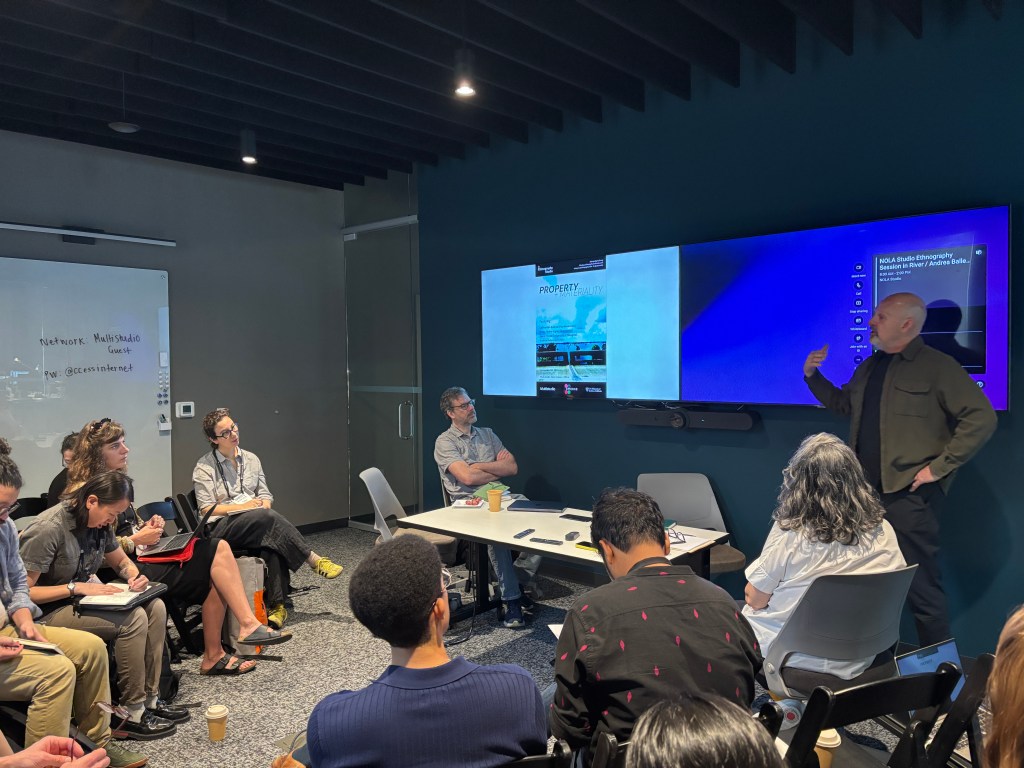
In the workshop, we investigated how the materiality of property mobilizes objects, spaces, and infrastructures into relations of ownership, access, and exclusion. Where does property exist? In a thing or as an idea? What are the values, assumptions, or benefits of ownership? With these starting questions, we gathered to think about different forms of appropriating and caring for the physical world.
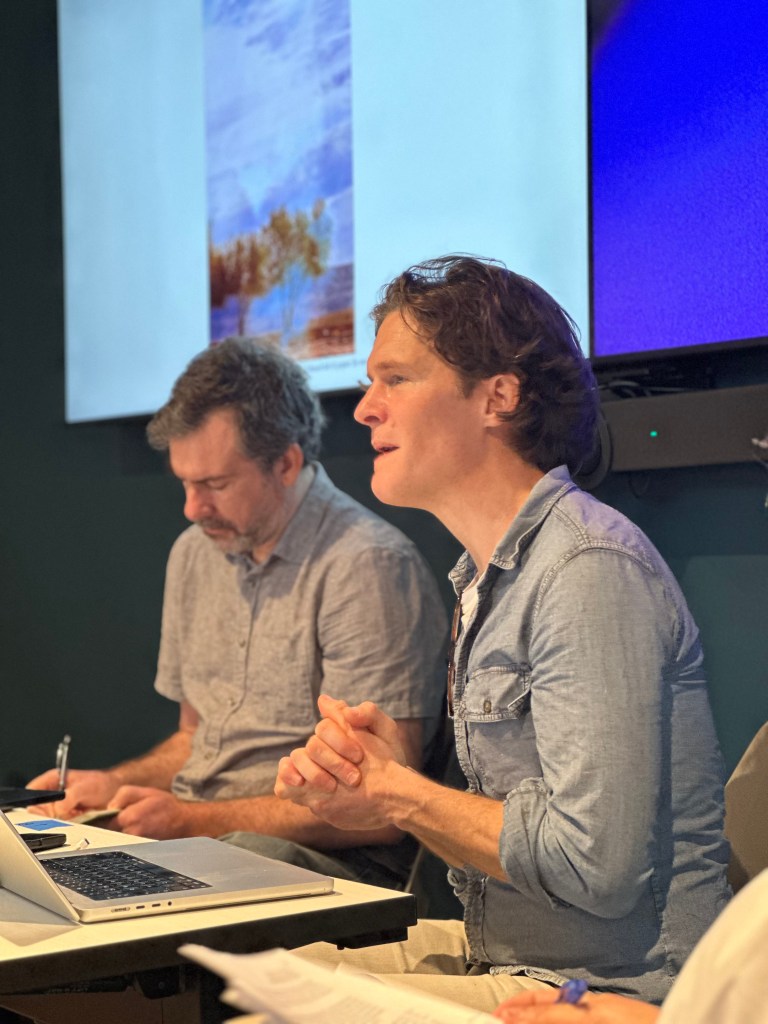

The discussion was divided into three panels. The first panel, Layered Property, included the work of Ana Carolina de Assis Nunes, Luis Gómez-Ordóñez , Emma Jahoda-Brown, Kimberly Chu, and Madeline Augusta Turner. We discussed the aspirations of the linearity of property for enclosure and division, opening up the possibilities of having different ideas of property lines and the porosity of their boundaries. Because property is an abstract construct, it can be difficult to treat it as a material object when it is not embodied in any physical form. One possible answer to this is to work on the historization of property: how did this object/element/matter become property? As Kregg Hetherington reminded us, “property is always a historical claim.”
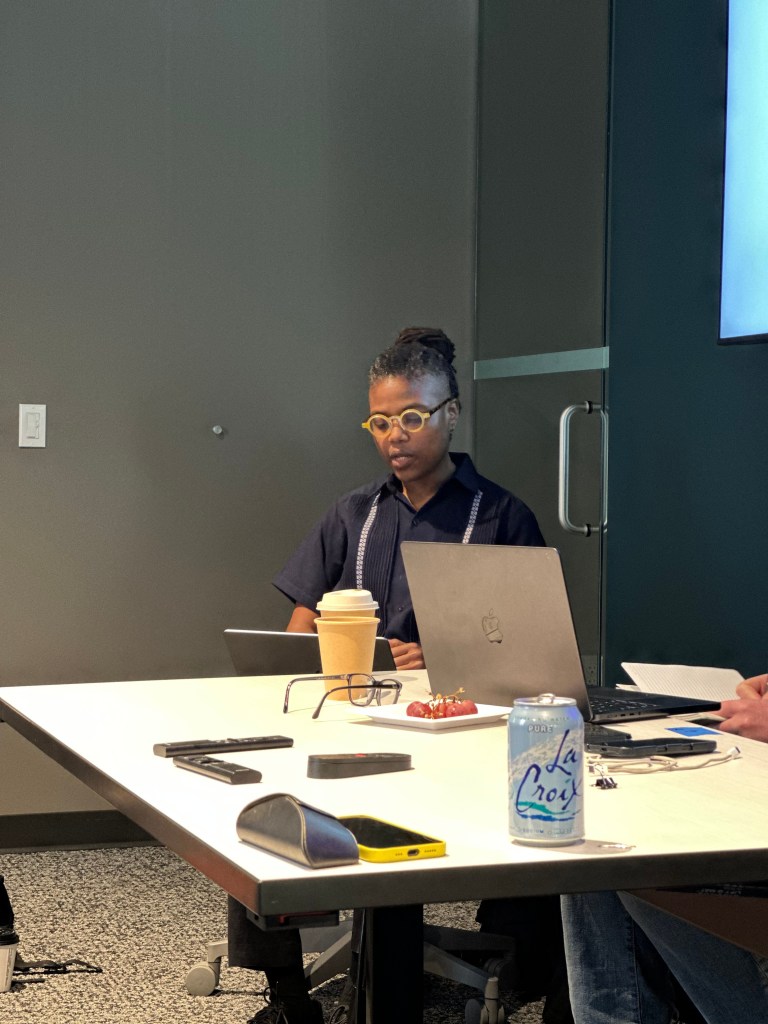

The second panel, Property in Motion, commented on the work of Emma Pask, Aline Bravo, Leanne Loo, Adrian Godboldt, and Bailey Miller. When property is in motion, how can we demand accountability? If property elements are uncountable and/or mobile, it poses challenges to approaching them as research objects and to our positionality in relation to them. Meghan Morris invited us to ask how we make ourselves in the making of property. Erosion and fluidity emerged as powerful methods and concepts to approach unstable or uncountable properties. These open different questions in terms of property limits, flow, and aspirations: What counts as property if it is never fully realized as property? Can we expand our analysis to non-compartmentilized objects?
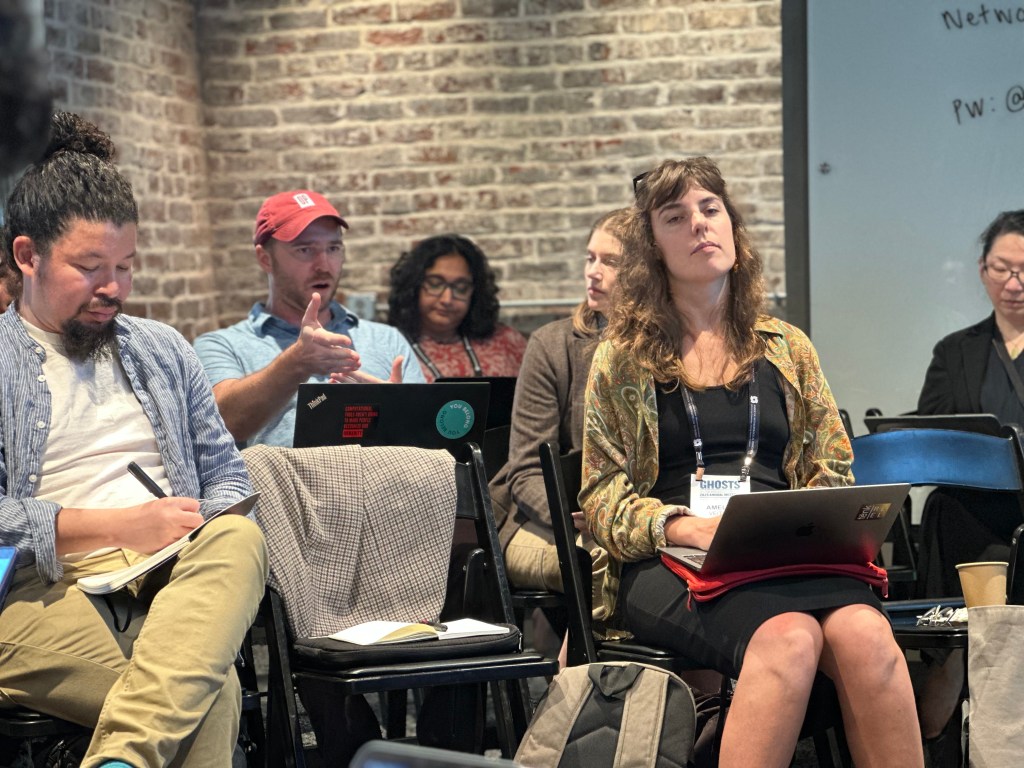
The third panel, Property and Adaptation, analyzed the work of Sita Mamidipudi, Parag Jyoti Saikia, Adela Zhang, Amelia Veitch, and Nan Kim. In this panel, we problematized property and its forms of legibility. The belief in the stability of certain kinds of property forms impacts larger claims about property. Two reflections were suggested. First, to extend our analysis by not only approaching how we built property but also how we deconstruct property ideas. Second, to trace the bundles and networks of power that sustain those property claims. This makes us inquire: who has the entitlement to decide over property?

Excerpts from participants’ submissions
Ana Carolina de Assis Nunes (Data & Society Research Institute): Data Centers in The Dalles, OR

Luis Gómez-Ordóñez (Department of Anthropology, University of Illinois Chicago I School of Psychology, National University Costa Rica): Intimate Plantation Archaeologies

Emma Jahoda-Brown (University of Southern California): Heavier Than Air


Kimberly Chu (Princeton University): Humans in the Ecosystem /
Monkeys in the Neighborhood

Madeline Augusta Turner (Stanford University): Soil Horizons
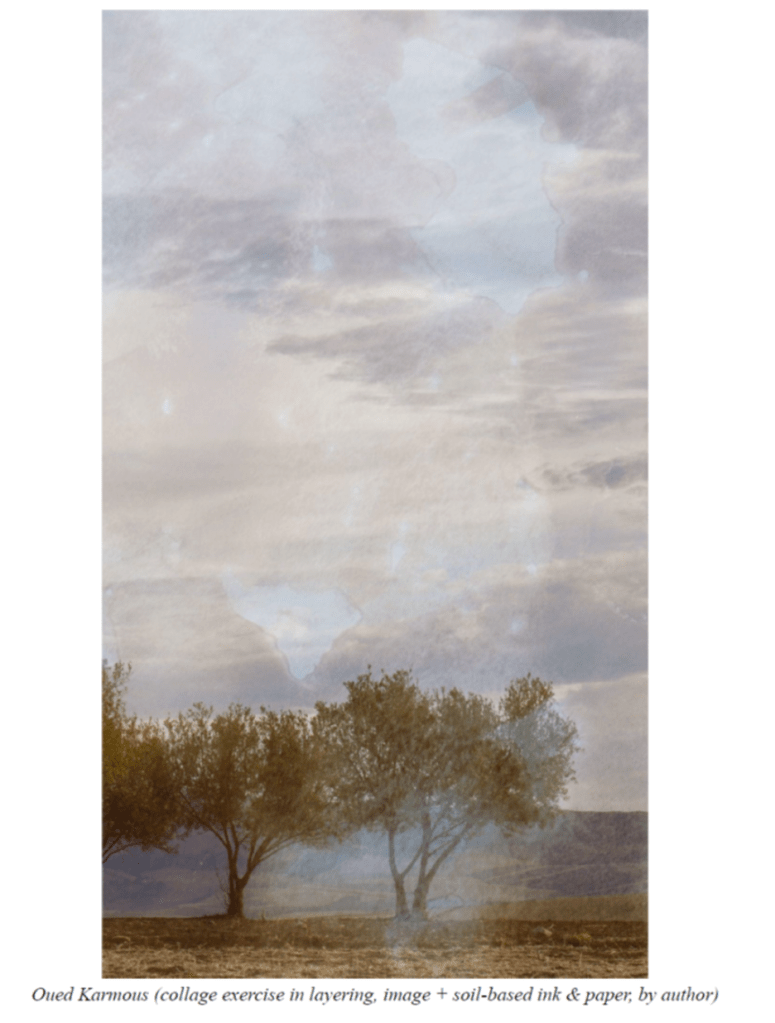
Emma Pask (The College of William and Mary): Pesticides
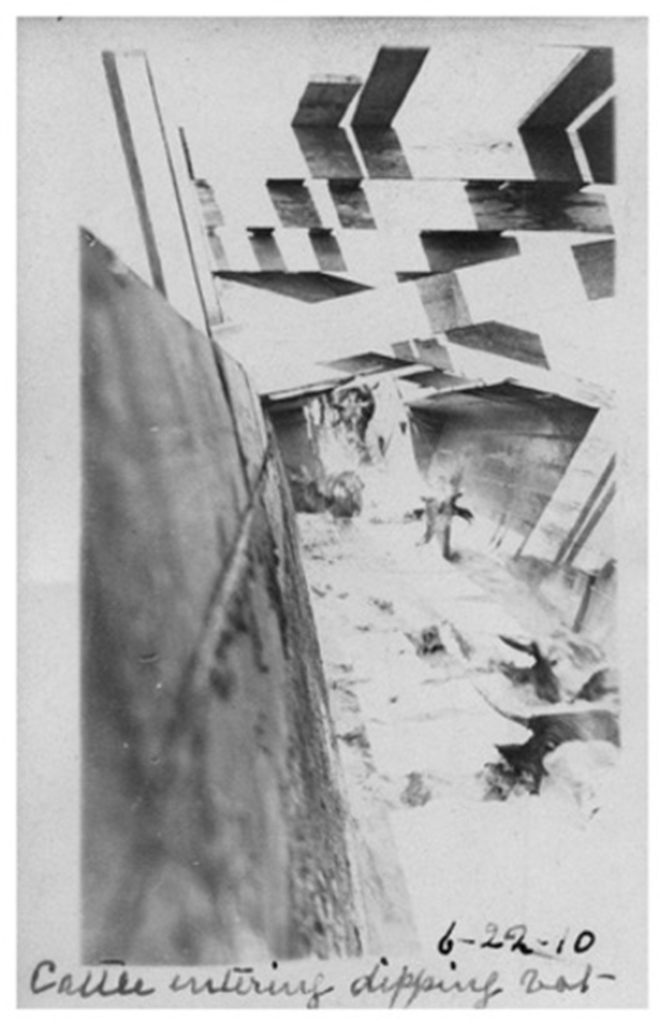
Adrian Godboldt (University of Massachusetts, Amherst): Surveying the Cloud


Bailey Miller-Straus (Princeton University): Counting with Satellites:
The Material Value of Rubble

Sita Mamidipudi (University of Pennsylvania): Unseeing: Leasing Water and Flooding Land

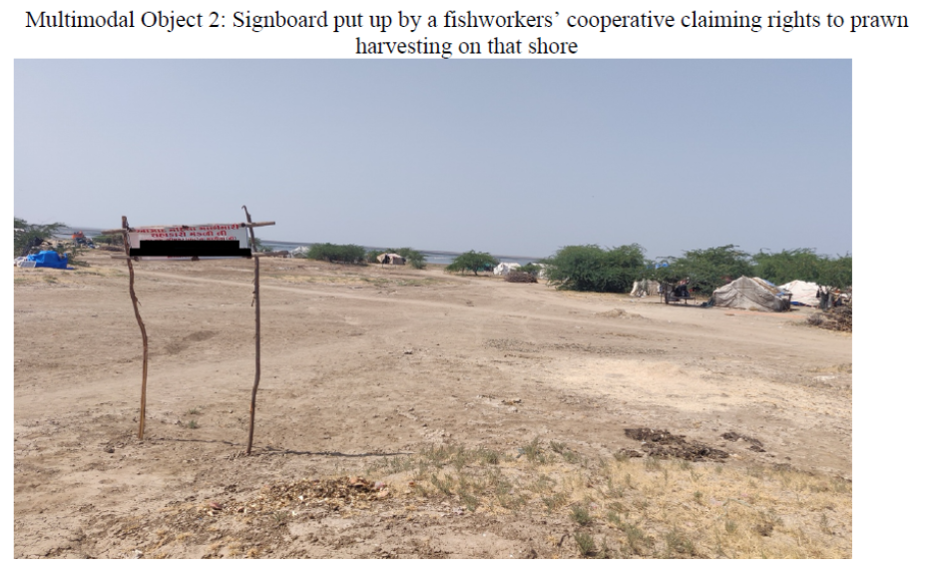
Parag Jyoti Saikia (University of North Carolina, Chapel Hill): Socio-Temporalities of Hydropeaking
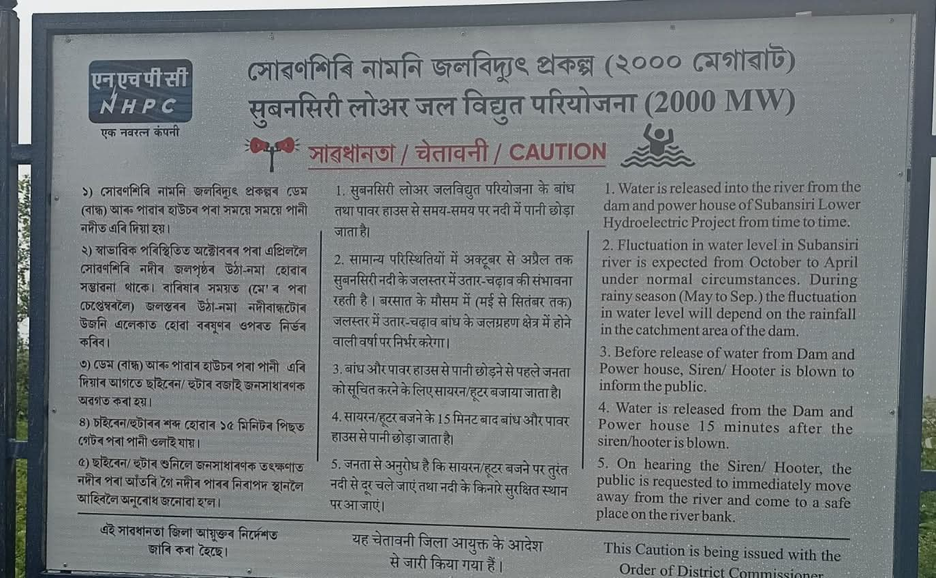
Adela Zhang (Brown University): Materializing Property Claims
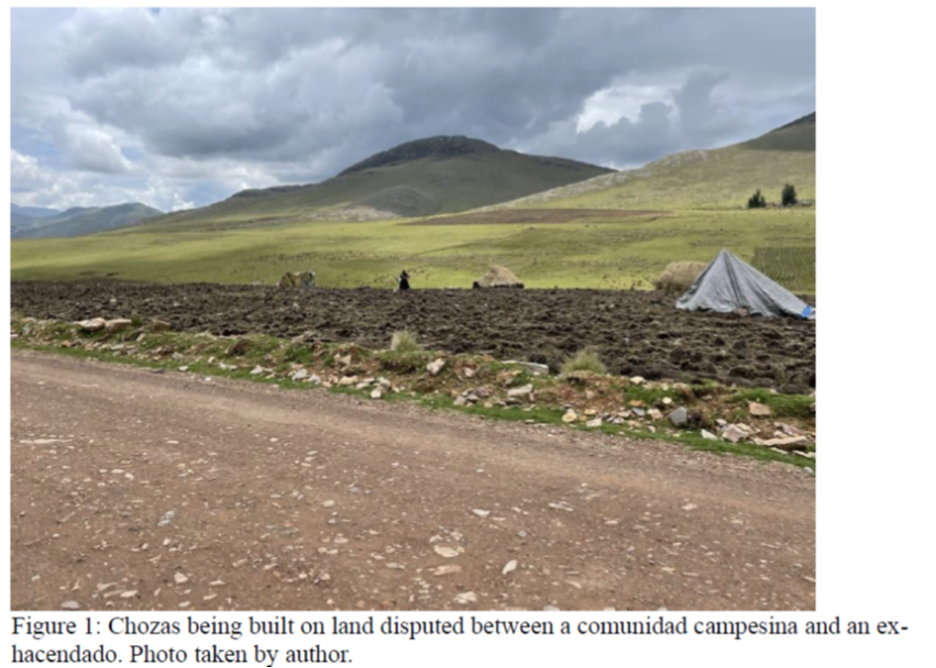
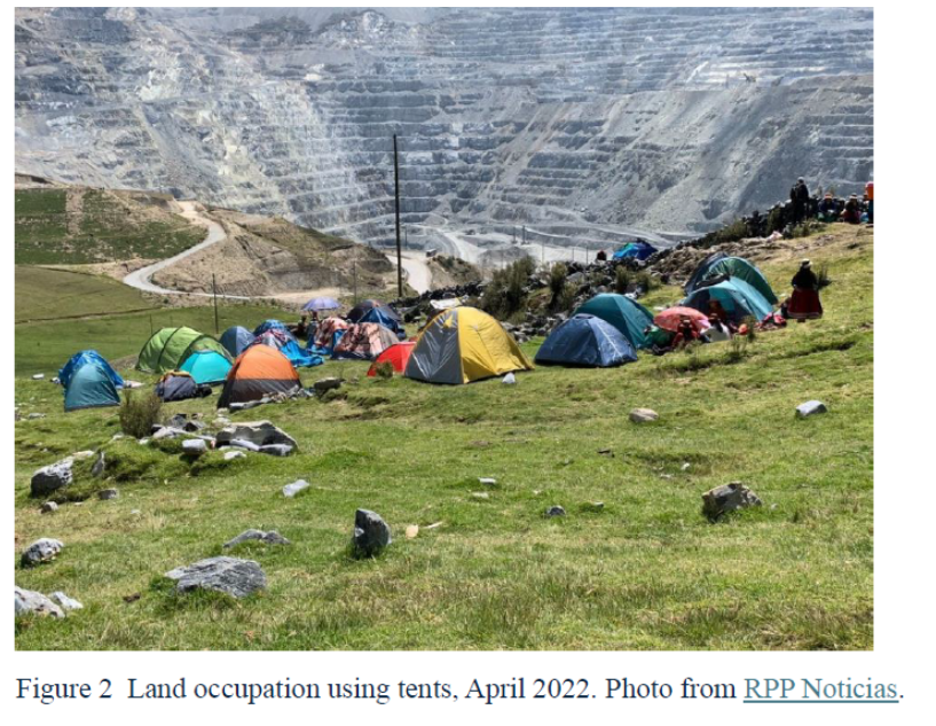
Amelia Veitch (Yale University, Agrarian Studies): Abandonment as neglect

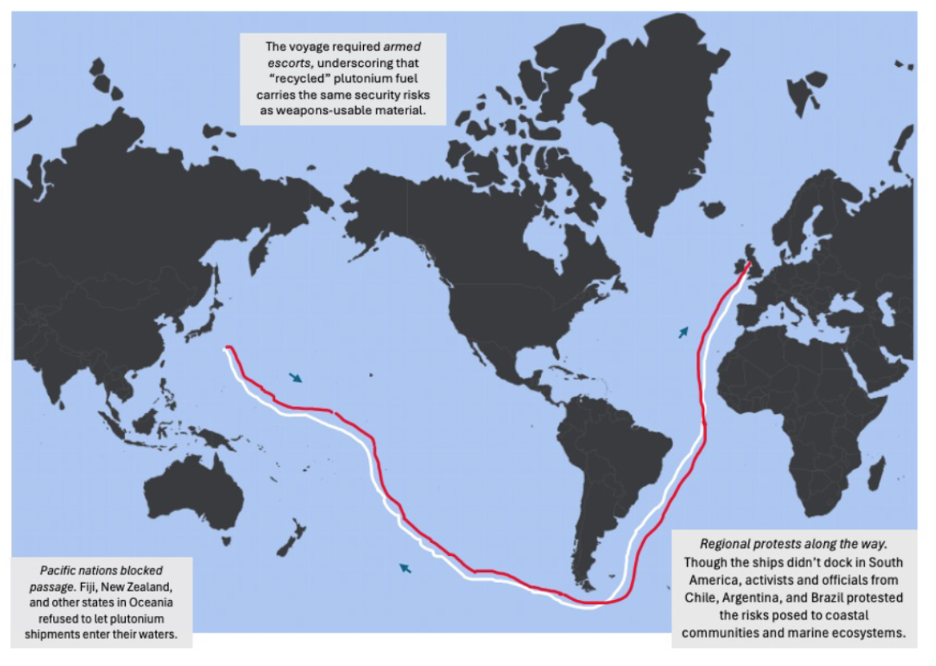
Nan Kim (University of Wisconsin-Milwaukee): Rethinking Property Through Plutonium’s Unstable Materiality