Missing, Underappreciated, Found Part II 2025

June 12, 2025
Goethe University Frankfurt
Martina Klausner and colleagues from Goethe University Frankfurt
Recap by Catharina Dietrich & Janine Hagemeister
What role do transitional knowledge devices play in conjuring ethnographic insights? Doctoral researchers and faculty gathered at Goethe University Frankfurt to think through precisely this question. The workshop was convened by Martina Klausner in the context of the DFG-funded Research Training Group Fixing Futures, together with Andrea Ballestero (University of Southern California, Ethnography Studio), who visited Frankfurt as a Mercator Fellow of the RTG.
Framed under the title “Missing, Underappreciated, Found: Thinking About Ethnographic Objects,” the workshop explored how transitional knowledge devices like charts, legal frameworks or datasets are objects of ethnographic studies and become companions in the making of research questions, encounters, and claims. The format was deliberately spacious: five doctoral researchers presented key devices from their projects in 15-minute inputs, followed by generous responses from Andrea Ballestero and discussion rounds with the full group of 14 participants.
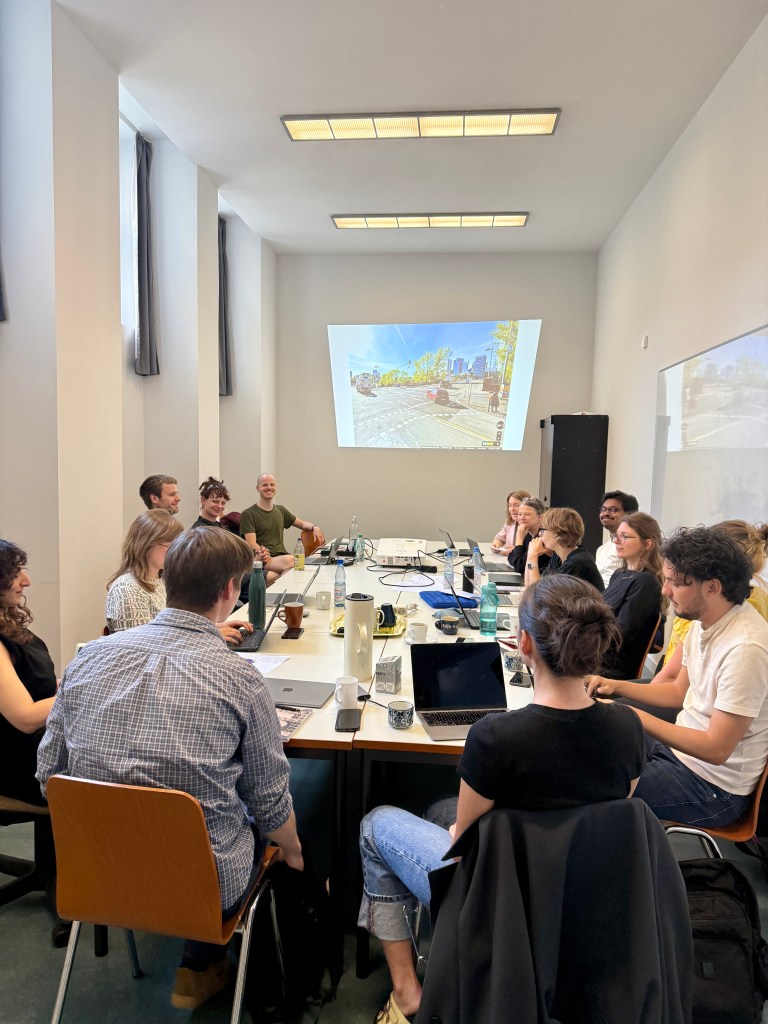
Thinking with Devices: Doctoral Presentations
The day opened with Nils Richterich, who examined legal personhood as a device in environmental governance. Focusing on Spain’s Mar Menor, recently granted rights as a legal person, Nils unpacked how this legal designation operates not as a singular intervention but as a multiplicity—embedded in preambles, decrees, and shifting networks of representation. The law, in Nils’s framing, is not a fixed object but a layered device that reveals and contests ecological and political histories.
Janine Hagemeister shifted attention to a context of urban data politics and presented the Smart City Roundtables in Frankfurt as a device that materializes network thinking. While the event format repeats distinctions between experts and laypeople, Janine traced how, as a device, the Roundtables are used by the municipal administration to connect experts and their expertise while consolidating its central coordination role.
Matthias Kloft invited us into the fast-paced world of digital finance, reflecting on candlestick charts as affective devices in online trading communities. These charts translate market data into signals and sentiments, shaping not just economic decisions but also beliefs about capitalism and futurity, Matthias emphasized.
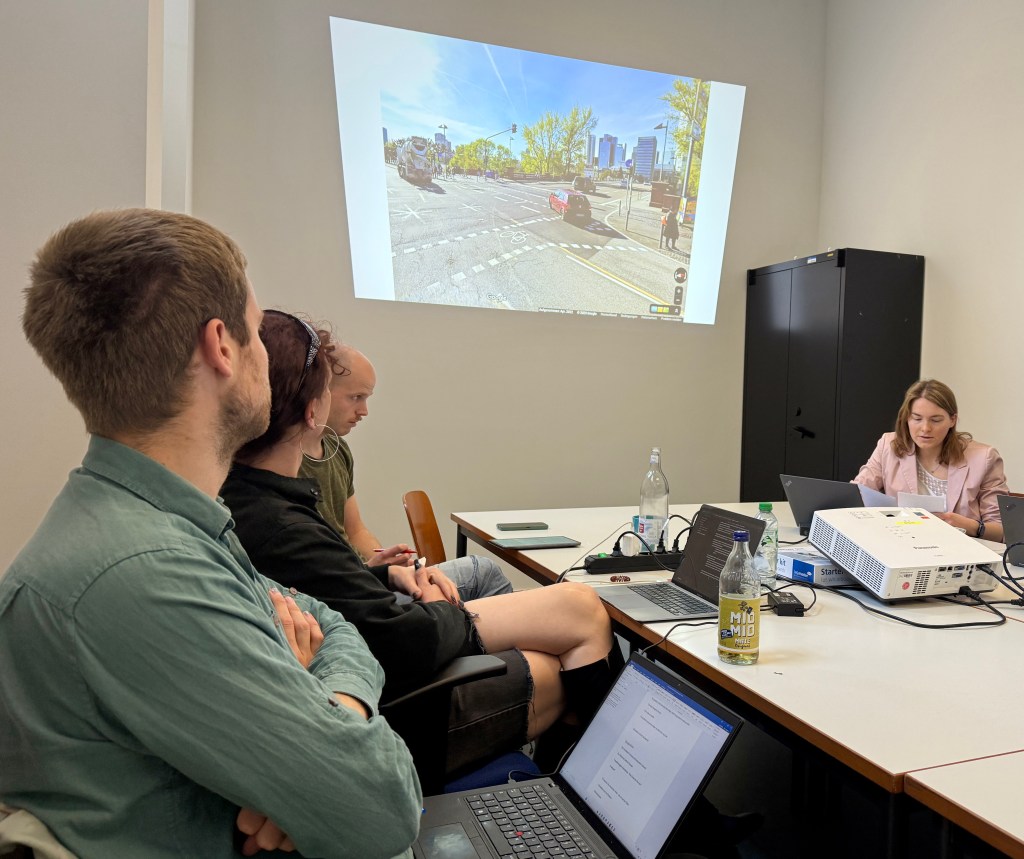
Turning to the politics of urban mobility, Catharina Dietrich shared reflections of the roles and effects of accident data in the context of ecological city transformation. She described how her work with the dataset created opportunities for experimental ethnographic encounters with activist groups. The dataset, Catharina argued, doesn’t merely depict risk, but constitutes how risk and safety are perceived and discussed, rendering certain dangers important and others invisible. In her reading, accident data is a technopolitical device that both empowers and constrains changes on urban infrastructure.
Naomi Bi closed the round with a look at the conceptual framework of IPBES (Intergovernmental Science-Policy Platform on Biodiversity and Ecosystem Services). This framework structures what kinds of knowledge are recognized as relevant for biodiversity governance. Naomi approached it as a normative and epistemic device that organizes not only scientific assessments but also political possibilities.
Knowing through Devices: Commentary by Andrea Ballestero
In her responses, Andrea Ballestero reminded the group to repeatedly ask what stories we want to tell and what knowledge we strive to produce as the answers to these questions would guide the building of a research project. Andrea picked up on recurring themes within the presentations—especially the role of meaning. A device, she claimed, is not necessarily attached to meaning. To work with devices, Andrea remarked, can be a way to produce knowledge on practices and effects without trying to excavate meaning by all means. She further offered a memorable definition of ethnography as the attempt to get as close as possible to someone else’s experience. Sometimes that means spending time with people, but just as often it means learning the things they learned, reading what they read, and understanding the epistemic and institutional contexts that shape their thinking. Critique, she emphasized, gains depth when it grows out of such closeness—especially when directed at technical or legal objects that resist distant reading.
This framing resonated with many in the room, also the new cohort of doctoral researchers who joined the workshop to listen and ask questions while arriving within the methodical and conceptual terrain of the RTG. A shared curiosity ran through the discussions: What does it mean to treat a device not simply as an object of analysis, but as a companion in ethnographic thinking?
Rhythms of the Day
Unlike many academic events, the workshop allowed time to dwell—with questions, with answers, with uncertainty, and with each other. The atmosphere was intimate, generous, and intellectually inspiring. A lunch in the Mensa courtyard under summer sun gave space for more informal conversations. In the afternoon, a small group visited the exhibition Fixing Futures: Planetare Zukünfte zwischen Spekulation und Kontrolle at Museum Giersch, where works by artists and researchers explore speculative futures and climate imaginaries.
By the end of the day, the notebooks were densely filled and so were the minds. We have opened a space to explore the politics, frictions, and affordances of the tools that guide our thinking. The workshop reminded us that ethnographic insights don’t just emerge from the field “out there,” but from the ongoing work of translating, interpreting, and struggling with the complex assemblages we encounter. With gratitude to Andrea Ballestero for her thoughtful presence and intriguing impulses, to Martina Klausner for hosting and moderating, and to all participating researchers for bringing this unusually rich and open discussion to life, we look forward to continue these important conversations.
