Interference: Salon 2025

April 11, 2025
University of Southern California
Meghanne Barker (University College London), Jenny Chio (USC), and Juno Salazar Parreñas (Cornell University)
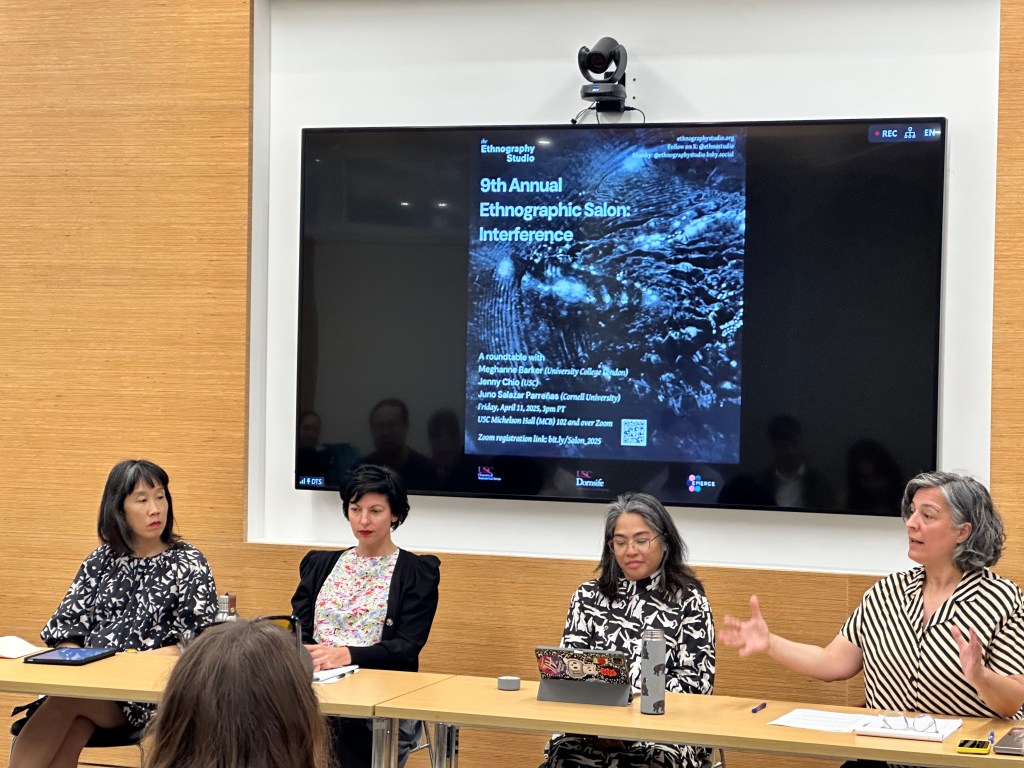
On April 11th, we held the 2025 Ethnographic Salon with guests Dr. Meghanne Barker (University College London), Dr. Jenny Chio (USC), and Dr. Juno Salazar Parreñas (Cornell University). The ninth-annual event brought together students to discuss their projects in relation to the concept of interference. How do we as ethnographers interfere within our research, via our research, despite our research, as our research? And into what do we interfere?
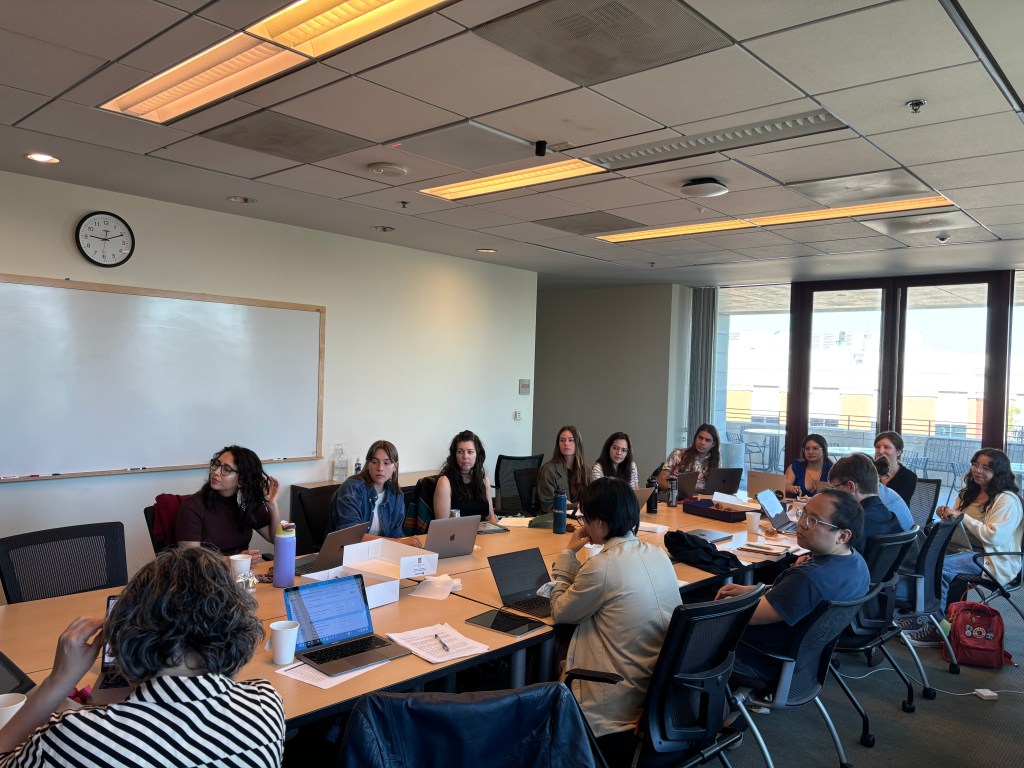
The morning workshop brought together twelve students from the University of British Columbia, UCLA, UC San Diego, UC Irvine, UC Santa Barbara, the Department of Anthropology at USC, and the USC Annenberg School for Communication and Journalism. Each participant had the opportunity to share how interference manifests in their work and received generous feedback from the three guests and fellow students. Excerpts from students’ work is shared below.
In the afternoon, the three guests participated in a roundtable moderated by Andrea Ballestero—recorded and available above! We explored interference as both a methodological challenge and a generative force in ethnographic work. Juno proposed thinking of disruption as a natural form of interference—a moment that invites pause and reflection, revealing how our stories often lead back to ourselves. Meghanne shared how her body and experience of adulthood were perceived as forms of interference, showing how personal presence can be read as disruptive. Jenny reflected on interference in terms of how interlocutors shape the research by choosing what to share, and how the expectation that something unexpected will happen—like the absence of photographs of interlocutors—can itself become a form of interference. Andrea brought attention to the tension between resisting interference and the desire or inevitability of interfering, raising the question of what it means to try not to interfere and the labor involved in maintaining that stance.
We also considered the ethics and affective labor of interference, particularly when withholding the desire to intervene. The presence of tools like a camera was seen as a form of enforced passivity or visible intrusion. Our conversation touched on moments in fieldwork where interference felt essential but impossible, or where its impact remained unnoticed until much later. We questioned what kinds of interventions—objects, narratives, or data—we want to release into the world, and how to make them accessible without reproducing harm. Linguistic and temporal dimensions of interference were also discussed, as well as the potential violence it can carry. Ultimately, we reflected on how to reckon with the unintended consequences of our work and the unexpected disruptions that define both fieldwork and academic life.
This event was part of the Ethnography Studio’s activities with the EMERGE collective.

Excerpts from students’ submissions
Claudia Mendoza Chávez (UC Santa Barbara)
My research focuses on groundwater policy implementation in California’s Central Valley region. I am approaching this through a form of patchwork ethnography at different levels where policy implementation is happening. The topic of interference for this workshop caught my attention because since starting graduate school I have struggled with my methodology and researcher identity. As a first-generation college grad with an immigrant background I am interested in highlighting and uplifting the voices of my community. But as someone with her fair share of privilege to be able to finish college and attempt the PhD, I decided that I did not want to continue the same extractivist model anthropology and academia in general have had in the past. I had wanted to use my insights to conduct research that could be beneficial to disadvantaged communities while not centering them as the main “subjects.” To do so I landed on this model of patchwork ethnography as well as the idea of studying up. I’ve attempted this on different levels as well as using activist research methods.
Russell Nylen (UC Santa Barbara)
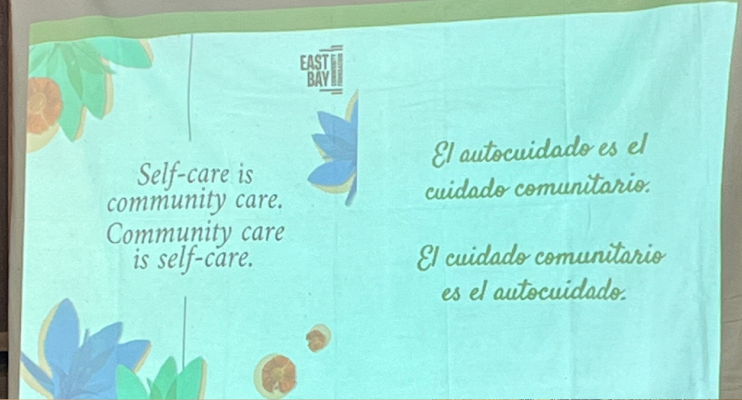
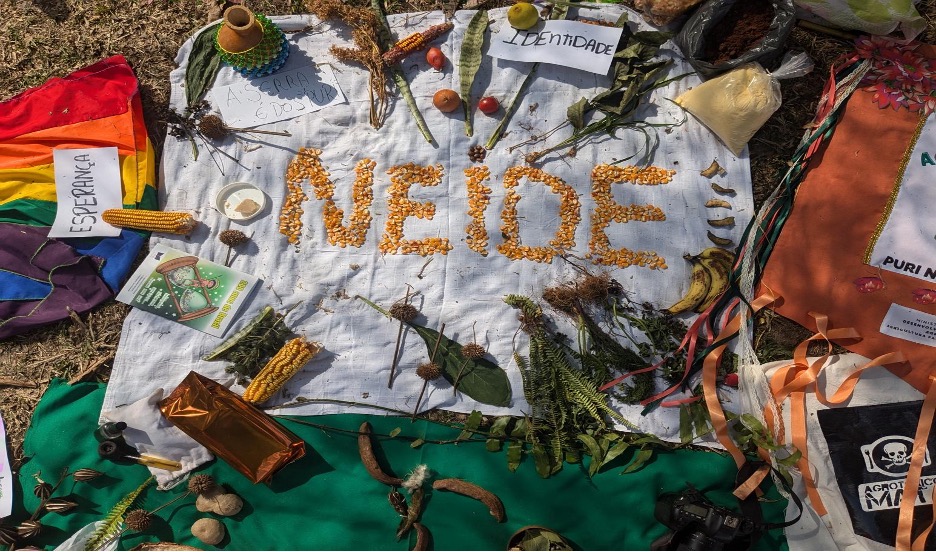
As a researcher examining extractivism, it has been a constant concern of mine to ensure that my research isn’t just another form of extractivism (knowledge extractivism). I hold a firm belief that all forms of research, and particularly ethnographic research, are a form of interference. With that, I establish a methodological commitment in my research to work with an anti-mining coalition so that the research is guided by collaboration with my interlocutors. While I admit that this is a necessary condition set forth by the anti-mining coalition for me to be able to have their permission to conduct participant observation, it also runs in line with my background in community organizing and conducting community-based participatory research. With the recognition that research causes interference, I hope to be reflexive and cautious to ensure that the interference from my research best serves the communities interests in their fight to prevent the expansion of new mining projects into their communities.
Emma Jahoda-Brown (USC)
Chiquita Canyon landfill opened in 1972 and so far, I haven’t been able to find much about the community reaction at the time although it’s safe to imagine it probably wasn’t well received. When prompted to think about interference as a concept, I immediately thought of how the landfill has been an interference in the lives of Val Verde residents and yet this connection feels like a flattening of the lived experience – speaking for myself and for my neighbors and friends I had when living there. How does the landfill interfere? This has been a preoccupation of mine for the past 10 years. There are the obvious answers – smell, the sound of garbage trucks and the more affective interferences of insecurity and frustration around soil, water and air quality – but I am curious to think more deeply about the specific moments when and exactly how Chiquita Canyon landfill has interfered in the daily lives of Val Verde residents. Going further, how can I use ethnography to surface these interferences and make them legible to others?

Gabi Huff (UC San Diego)
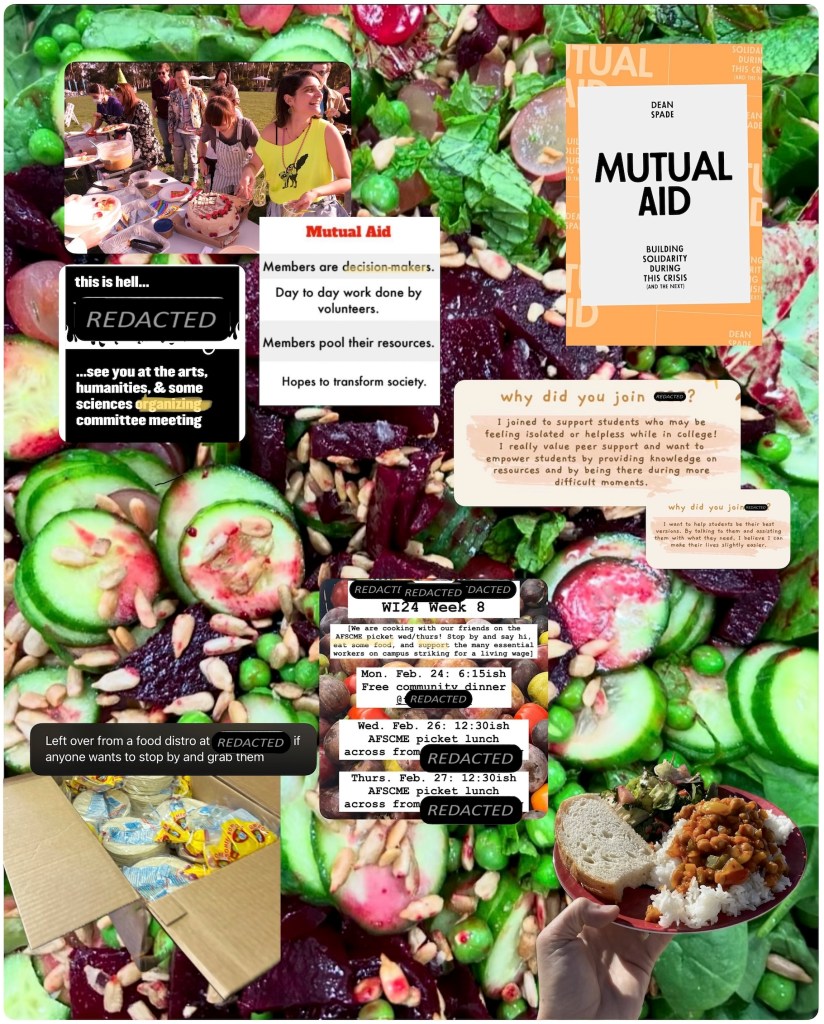
The below collage strives to make visible the inherent interference that arises from being involved in peer support spaces. Part of doing the work of peer support involves intervening in some way and make some sort of change; one cannot just be a fly on the wall that does not have any impact on the world around it. Pulling images from their Instagram pages, I highlight the interference that I identify in my two fieldsites: the power to help make decisions, to transform society—or at least, the power to make things better for other human beings like us. In being a participant in these spaces during fieldwork, my interference cannot be avoided, nor do I want it to be. I, too, come to these spaces because I want to make things better for others. By including images of invitations to grab free food or be in community, I invite the viewer to reflect on what engagement produces for peer supporters; how interference does not just flow one way from peer supporter to recipient of this support, or researcher to the members of the community that they study. Both parties are changed, transformed.
Megan Grabill (UC Los Angeles)
While I am very early in my project, I see interference constantly in my topic. Many of the ethical tensions around end of life tend to revolve around discontinuing curative treatments or discontinuing life support. In those cases, the choice to “interfere” is often felt by the family as the choice to kill their loved one– it’s perceived as an active choice, even if the treatment is causing suffering in the patient and is not extending or improving their quality of life. Several of the ethics-aligned people with whom I’ve spoken have described how they ascertain whether or not a conflict or concern is truly an “ethical” one (as opposed to a family conflict or a quality assurance). I was really interested by this rhetoric– as someone not formally trained in ethics, all of these struck me as at least Morally significant. Moments where ethics teams chose to intervene or decline to participate are moments where their interference or non-interference establishes institutional norms around ethical concerns. In cases of quality assurance, this is extremely interesting to me because it translates the conflict into a legal and economic question–a question of protecting a business. Finally, I find myself interested in the “neutral” position of the chaplain, who ostensibly does not counsel or proselytize or convert. Chaplains emphasized the importance of patient-led care, a doctrine of non-interference that they use to position their work as neutral and non-denominational.

