Alchemies of a Saltwater Frontier 2024
April 8, 2024
University of Southern California
Jeffrey Kahn (University of California Davis)
The Ethnography Studio co-sponsored with the USC Department of Anthropology a talk by Jeffrey Kahn titled, “Alchemies of a Saltwater Frontier: Haitian Cargo and the Possibility of a ‘Minor’ Logistics.”
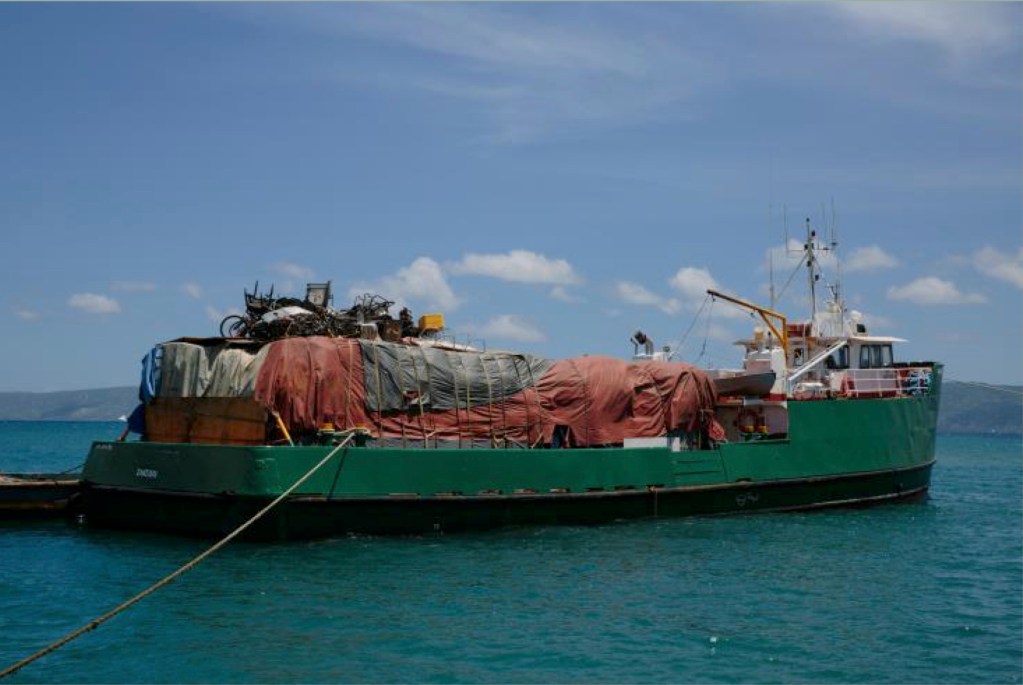
When it comes to talk of “shipping” and “logistics” these days, what is likely to come to mind are the massive containerized vessels traveling the arteries of global trade and the mechanized seaports where they come ashore. But what of the smaller freighters, the lower density routes, and the shallow water ports that intersect with these more visible networks of international commerce? In this talk, Kahn explored the history of Haitian-owned freighters that have been trading between Haiti’s provincial ports and the Miami River since the 1970s, how this shipping economy became racialized in ways that marked it and the river with a “threatening” Haitian blackness, and how local government agencies, real estate developers, and law enforcement officials worked to remake the aesthetics of the river as something other than Haitian and Black. This history raises a host of questions about the dynamics of policing, racialization, and logistics at work in the maritime borderlands of the present.

Jeffrey Kahn is associate professor of anthropology at the University of California, Davis. An interdisciplinary scholar with training in law and anthropology, his interests include border policing, maritime commerce, seafaring knowledge, legal geography, semiotics, and ritual economies, among other topics. Professor Kahn’s award-winning first book, Islands of Sovereignty: Haitian Migration and the Borders of Empire (University of Chicago Press 2019), examines how boat migration from Haiti to the United States during the last three decades of the twentieth century led to the development of new forms of legal activism, border governance, and oceanic policing that have remade the spatiality of the American nation-state. He is working on a second book that examines how Haitian seafarers have forged complex maritime geographies of mobility and interconnection in the shadow of U.S. extraterritorial surveillance regimes. More broadly, it explores how an ethnographic and historical understanding of Haitians’ shipping and migratory projects can illuminate questions related to the precarity of commodity supply chains, the production of space, and the semiotics of racialization operating in the aqueous border spaces of the globe.
